
Integrating animals into the farm: how to start with rotational grazing
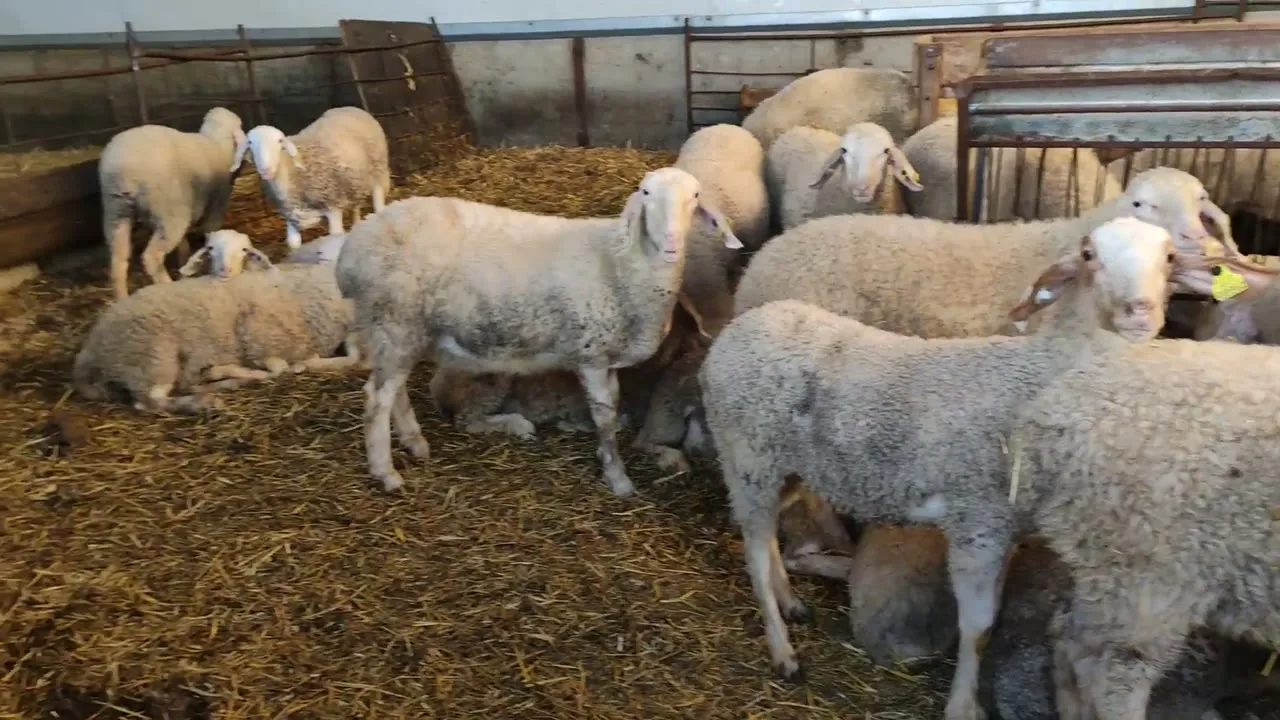
On many farms, animals disappeared decades ago. First came the tractor, then herbicide and synthetic fertiliser, and livestock moved to another holding, many kilometres away. The result is well known: soils with little life, more machinery passes and a growing dependence on bought-in inputs.
Integrating animals into the farm is a very useful tool in regenerative agriculture. Not out of romanticism, but because a well-managed animal does three jobs at once: it controls the grass, returns organic matter to the soil and keeps life moving through the system. In this guide we explain how we approach it at True Regenerative and where to start.
Why animals matter on a regenerative farm
Grass, manure and urine: the missing cycle
When an animal eats grass and leaves manure and urine, it returns organic matter and minerals to the soil on the spot, with no lorries or sacks. That input feeds the soil microbiology, which is what ends up building structure and fertility. The cycle is simple: from the sun to the grass, from the grass to the animal and from the animal to soil life.
Weed control without herbicide
In woody crops such as almonds, olives or vines, the grass in the alleys is usually controlled with a mower, tillage or herbicide. A herd in rotation can do that job. In Arnes (Terra Alta), in an almond orchard, we work with horses in rotation to control the grass and regenerate the soil; you can see it in our real cases.
Less machinery, less compaction
Every tractor pass costs diesel and hours, and it compacts the soil. If animals take over part of the grass control, the farm needs fewer passes and the soil breathes better.
Rotational grazing: the key is time, not the number of animals
The most common mistake is to think that releasing animals is enough. A herd left loose across the whole farm all year ends up overgrazing the areas it likes and leaving the rest untouched. Rotational grazing aims for the opposite: many animals in a small area for a short time, followed by a long rest so the grass can recover.
What the evidence says
It is worth being honest: science does not give a single answer. A review of grazing experiments on rangelands (Briske et al., 2008, Rangeland Ecology & Management) concludes that, in most controlled trials, rotational grazing did not produce more forage or more animal production than continuous grazing at a comparable stocking rate. The authors themselves note that these trials usually follow fixed schedules and do not capture adaptive management that responds to field conditions.
By contrast, a study comparing neighbouring ranches on Texas tallgrass prairie (Teague et al., 2011, Agriculture, Ecosystems & Environment) found better plant cover and better soil indicators (organic matter, water retention, microbial life) under adaptive multi-paddock grazing than under heavy continuous grazing. It compares real ranches rather than a controlled trial, so it shows what good management can achieve, but it does not prove it will always work.
Taken together, both studies suggest that results depend mainly on management: stocking rate, rest periods and the ability to adjust. That is why we do not promise outcomes, nor that soil will store carbon securely or indefinitely: we treat grazing as a management tool that is measured on each farm.
The three parameters to decide
- Paddock size: how much area the fence opens each time.
- Grazing period: how many days the animals stay in that paddock.
- Rest period: how long the grass takes to be ready again before repeating.
No single figure works for every farm. It depends on the climate, the type of grass, the season and the animals. That is why we prefer to observe and adjust: if the grass is shaved to the ground, the animals stayed too long; if it is almost untouched, you can adjust the paddock or the days.
Signs you are on the right track
- The soil is not left bare after the herd has passed.
- The grass regrows strongly during the rest.
- More species appear in the cover over the years.
- Water soaks into the soil better when it rains.
You can track these signs with field tests for soil health and with bioindicator plants.
Which animal to choose for your farm
Horses, sheep and cattle in woody crops and pastures
Ruminants and equines move the most ground. In woody crops you need to make sure they do not damage trunks or low branches, and choose the species and season to suit the crop. A well-managed cover in the alley of a woody crop can become pasture; to go further, see our guide to cover crops in woody crops.
Hens and ducks in vegetable plots and orchards
Poultry is a good entry point for small farms: they scratch, eat insects and seeds and leave very rich manure. Ducks work well in wet areas and in systems with water. If you combine fish and crops, you will be interested in our article on regenerative aquaculture.
Bees and pollinators
They do not graze, but they close the cycle of many crops. They are also bioindicators: their presence, or absence, tells you how the farm is doing.
The logistics nobody mentions
Integrating animals is not just a technical decision. You have to sort out the day-to-day:
- Fencing: mobile electric fencing lets you open and close paddocks quickly. It has to be set up, taken down and checked.
- Water: animals need to drink in every paddock. Plan mobile troughs or fixed points. Keyline design helps decide where to store and distribute water.
- Salt and minerals: available to the herd.
- Animal health: regular veterinary checks and compliance with your regional regulations.
- A responsible person: someone on the farm has to move the animals when it is time. Without that person, the system does not work.
Common mistakes when starting
- Leaving the animals too long in the same paddock. It is the quickest way to degrade the pasture.
- Not respecting the rest period. Coming back too soon exhausts the roots.
- Bringing in animals without a water plan. They end up gathering around the trough and compacting that area.
- Trying to do everything in the first year. Better to start with one paddock, learn and expand.
Animals and bio-inputs: two pieces of the same system
Manure is an excellent raw material for an on-farm biofactory. With it you can make bokashi or reproduce mountain microorganisms. What used to be waste becomes the farm's own fertility, and the farm depends less on what it buys in. That is the core idea behind all our work: that farmers become self-reliant, not dependent.
How we support you
At True Regenerative we always start with a diagnosis of the farm: soil, water, crops, animals and people. From there we design the grazing system and the input transition, and we train your team to run it on their own. We work from La Palma de Cervelló (Barcelona) across Catalonia, the rest of Spain and abroad; see how we approach regenerative agriculture in Catalonia.
If you are a company with supplier farms and want to support their transition, see our For companies page. If you have a farm and want to integrate animals, tell us about it.
To see which animals work on our farms, visit our animals page.
Be the one who does it.
Sources
- Briske, D. D., Derner, J. D., Brown, J. R., et al. (2008). Rotational grazing on rangelands: reconciliation of perception and experimental evidence. Rangeland Ecology & Management, 61(1), 3-17. https://doi.org/10.2111/06-159R.1
- Teague, W. R., Dowhower, S. L., Baker, S. A., et al. (2011). Grazing management impacts on vegetation, soil biota and soil chemical, physical and hydrological properties in tall grass prairie. Agriculture, Ecosystems & Environment, 141(3-4), 310-322. https://doi.org/10.1016/j.agee.2011.03.009