
Cover crops in Mediterranean perennial crops: vines, olives and fruit trees
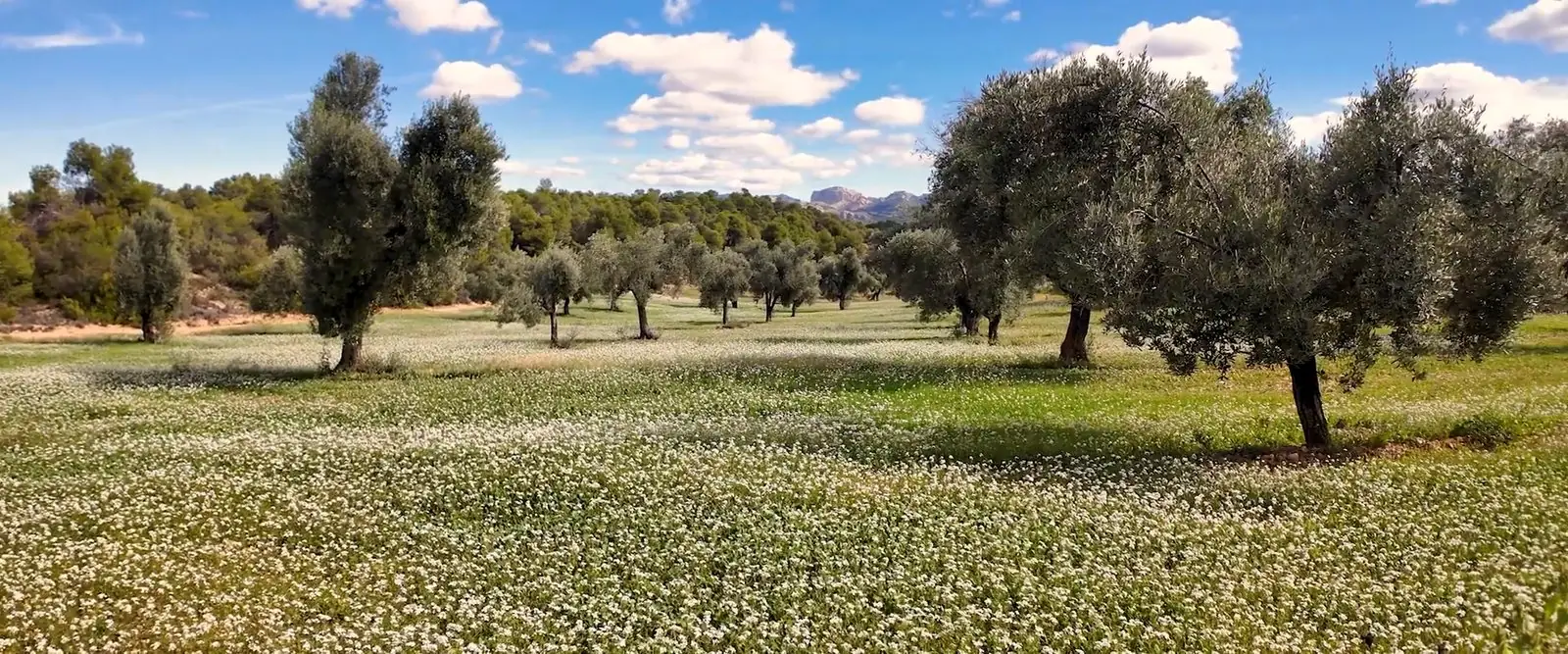
In many dryland vineyards, olive groves and orchards, a tilled, bare inter-row has for decades been synonymous with a "well-kept farm". But bare soil on a slope, with torrential autumn rains, loses earth every year. Cover crops are the alternative, and also one of the practices that raise the most doubts: won't they take my water?
In this article we review what research says, what types of cover exist and how to manage them in a Mediterranean climate.
Why cover the soil
Keeping the soil covered as long as possible is one of the 10 regenerative agriculture criteria agreed by CREAF and the Iberian Regenerative Agriculture Association with nearly 200 producers, organisations and scientists. The aim, according to CREAF: reduce erosion and retain moisture.
The US Department of Agriculture's NRCS includes "maximise cover" among the principles of soil health and explains that healthy soils hold more water and suffer less runoff and erosion.
The vineyard cover crop guide from IFAPA (Andalusian regional government) summarises the agronomic benefits reported in the literature: protection against erosion, less runoff, less surface crusting, better soil structure and activation of microbial life.
And field data confirm it. In the RegeneraCat project, CREAF compared regenerative and conventional plots on Catalan farms and measured in some of them a soil carbon concentration at least 35% higher and a water-holding capacity at least 9% higher. It also observed that regenerative management buffers maximum summer soil temperatures by up to 3.6 °C.
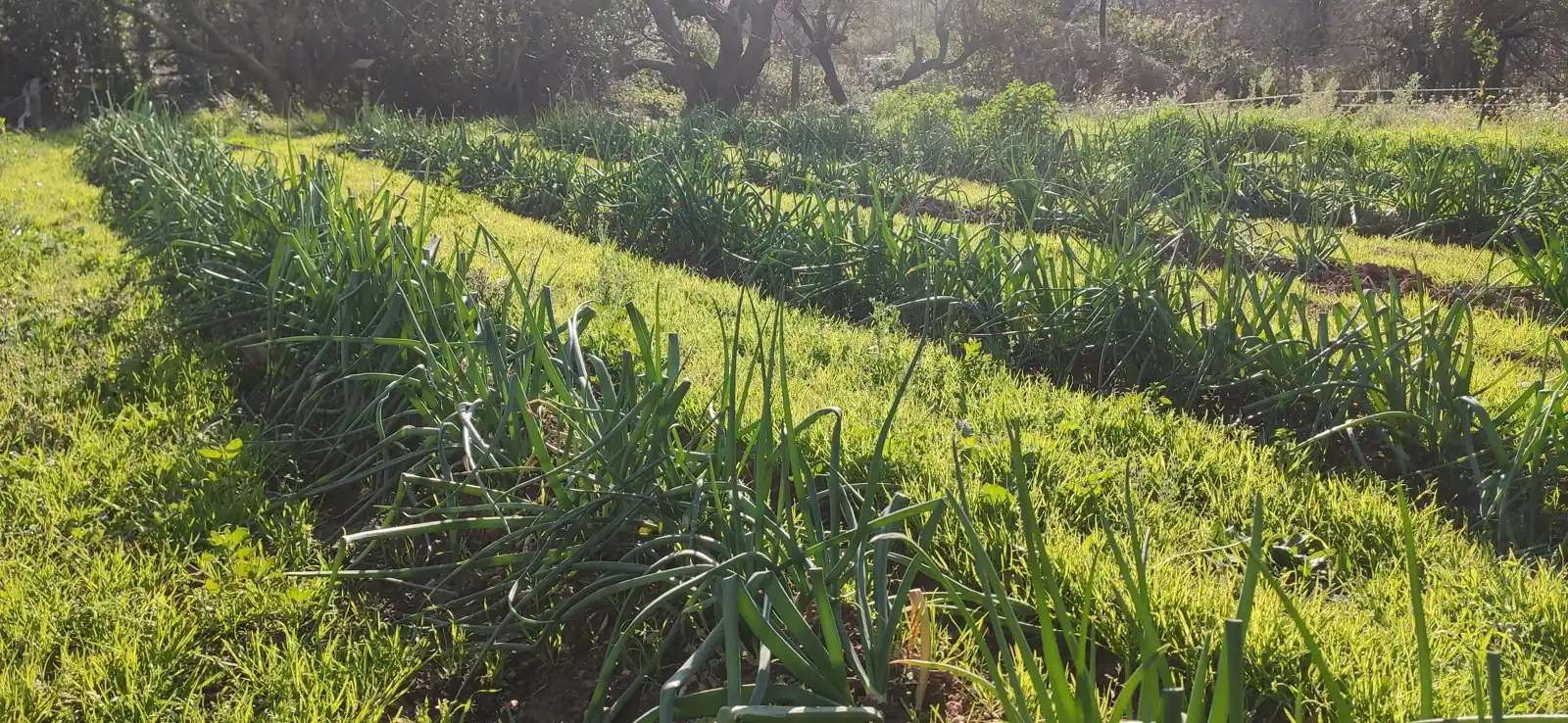
The big fear: competition for water
It would be dishonest not to talk about it. The IFAPA guide says it clearly: the cover competes with the crop for water and nutrients, and depending on the intensity and timing of that competition, the vine can be affected.
So the key is not "cover or no cover" but which cover, when and how it is managed.
Types of cover by duration
The IFAPA guide distinguishes two main types:
Temporary cover
It is active in autumn and winter, exactly when it rains and when the soil is most vulnerable to erosion. In early spring it is removed: mown or mulched and left as a mulch, incorporated as green manure or, with some species, left to dry off after completing its cycle.
For Mediterranean dryland, it is the most prudent option: it protects the soil in the rainy season and leaves the water for the crop when it needs it most.
Permanent cover
It is active all year and competes with the crop throughout its cycle. According to the IFAPA guide, its use in vineyards is usually limited to areas with more than 700–800 mm of rain a year or to vineyards with enough irrigation water, unless low-competition species or species adapted to the vine's cycle are used.
Spontaneous or sown
- Spontaneous cover: you let the plot's natural flora grow. It is cheap, but the IFAPA guide warns that if managed only with a flail mower it can shift towards perennial, creeping, strongly regrowing species that are hard to control.
- Sown cover: you choose one or more species, often grass–legume mixes. It costs more at first, but gives you more control over the timing and intensity of competition.
Your spontaneous flora is also information. Before deciding, take an inventory of bioindicator plants: it will tell you a lot about the soil you are going to cover.
How to manage it
IFAPA lists several ways to control the cover: mechanical mowing or flailing, tillage, grazing or chemical mowing. From a regenerative point of view, our favourites are:
- Mowing or flailing and leaving the residue on the surface as a mulch, which keeps protecting the soil in summer.
- Planned grazing with sheep, another of the criteria of CREAF and the Iberian Regenerative Agriculture Association, as long as the animals are moved frequently.
- A calendar adjusted to the crop: in dryland, remove or mow the cover before competition for water coincides with the crop's critical stages.
Cover crops and water design
Cover crops work best when water is well planned. If your farm is sloped, combining cover with keyline design helps rain soak in instead of running off. FAO reports that after Hurricane Mitch in 1998, Central American farms with agroforestry, contour cultivation and cover crops retained 20% to 40% more topsoil than neighbouring conventional monoculture farms.
How to start without risking the harvest
- Start with the inter-rows with most erosion or steepest slope.
- Try a temporary cover first in a few rows.
- Compare with uncovered rows: moisture, vigour, yield and soil condition.
- Measure infiltration and structure with simple field tests, before and after.
- Scale up once you have data from your own farm.
Common mistakes
- Leaving a vigorous permanent cover in dryland without controlling its competition.
- Mowing too late in spring.
- Always flailing the same way and ending up with flora that is hard to manage.
- Burying all the residue instead of leaving it as mulch.
- Generalising without testing: every farm and every soil responds differently.
Covering is protecting
Cover crops are one of the most powerful tools for protecting the soil of a Mediterranean perennial crop, but they require management. Done well, they protect the soil in the rainy season without stealing water from the crop when it needs it.
If you want to design a cover crop strategy for your vineyard, olive grove or orchard, adapted to your climate and soil, see our crops page or write to us.
Be the one who does it.
Sources
- IFAPA, Junta de Andalucía (2015). Guía de cubiertas vegetales en vid. https://www.juntadeandalucia.es/agriculturaypesca/ifapa/servifapa/registro-servifapa/406aee3d-31f0-4f40-8415-9526cf178cf3/download
- CREAF. Ciencia y campesinado definen los diez criterios básicos de la agricultura regenerativa (12/02/2026). https://www.creaf.cat/es/articulos/diez-criterios-agricultura-regenerativa-ciencia-campesinado
- USDA NRCS. Soil Health. https://www.nrcs.usda.gov/conservation-basics/natural-resource-concerns/soil/soil-health
- FAO. The 10 elements of agroecology: Resilience. https://www.fao.org/agroecology/overview/the-10-elements-of-agroecology/resilience/en