True Regenerative · field systems

On-farm · input autonomy

Biofactory and bio-inputs

Fertility is cooked up on the farm: compost, bokashi, biochar, ferments and liquids the team learns to make, watch and adjust. Infrastructure, protocol and training; no miracle product.

On the farm

Bio-inputs by family

What a biofactory produces, grouped by family.

Compost and bokashi

Organic matter that breathes and ferments: the living base of the soil.

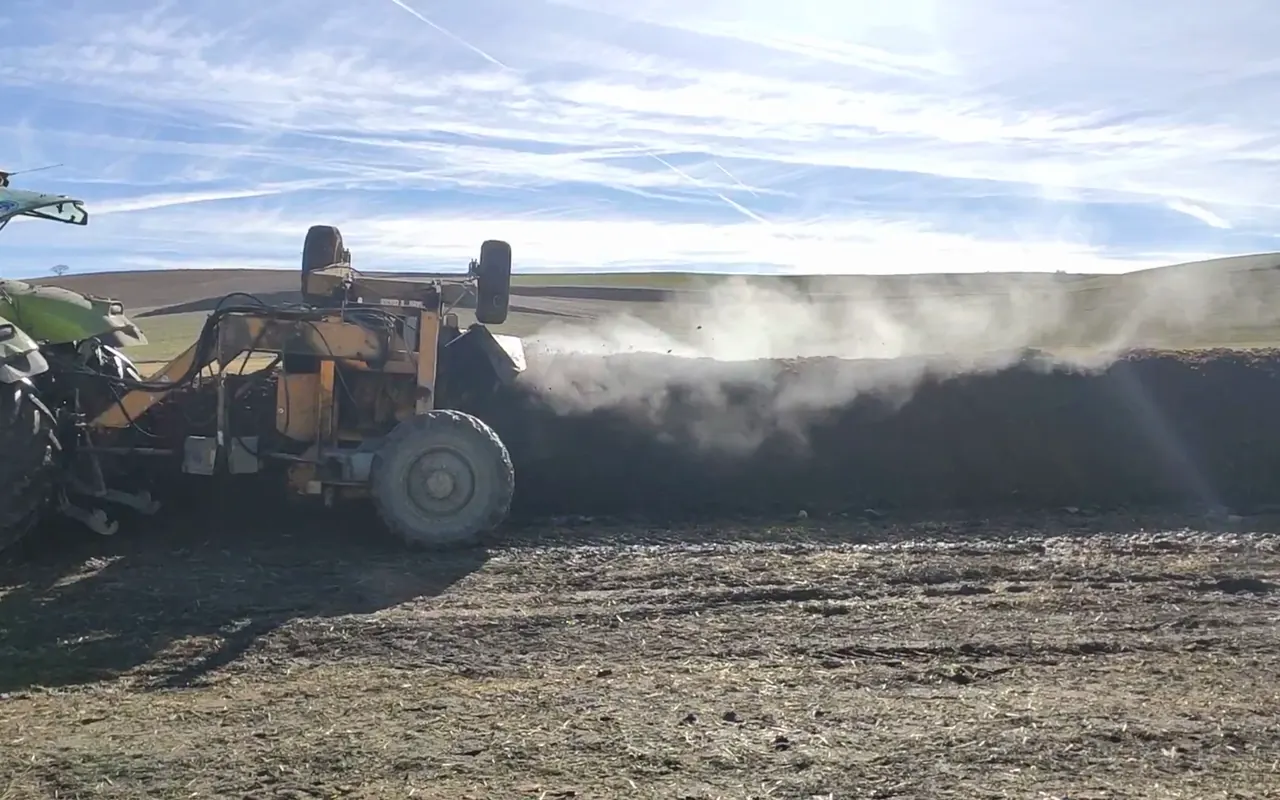
BiofactoryThe compost breathesThe turner flips the windrow. Without air, the compost dies down and there’s no home-made input.

Biofertilisers and ferments

Biol, aerobic and anaerobic ferments and seed treated on the farm: liquid microbiology.

Aerobic fermentThe drum bubblesA compressor pumps air into the liquid. Every bubble oxygenates the mix and its microbes.
Aerobic fermentThe tank foamsThe foam gives away the aerobic ferment in the tank. It’s made on the farm so you don’t depend on the bag.
Anaerobic fermentIt bubbles in the airlockThe drum is sealed. The fermentation gas escapes through the valve and bubbles.
SeedEvery grain, coatedThe seed comes out coated in its own layer, ready to germinate. The treatment is done on the farm; it doesn’t arrive in a sealed bag.

Mineral broths

Broths prepared on the farm to feed and protect the crop.

Mineral brothCalcium polysulfideCalcium polysulfide, for pest control and crop nutrition.
Mineral brothHumic and fulvic acidsHumic and fulvic acids for the crop.

Biochar

From branch to stable carbon: pyrolysis with the farm’s own residues.

BiocharBranches on the fireBranches and trunks in the drum: biochar starts from the farm's own residues.
BiocharQuenched with waterWater cuts the fire: what remains is char, not ash.
BiocharThe charcoal, finishedBiochar, already crushed: stable carbon from plant residues, used as an amendment when the diagnosis calls for it. Charged with compost or ferments, it gives soil microbiology a home.
What it is

On-farm biofactory

A biofactory is the space and workflow where bio-inputs are produced from local or nearby materials: organic residues, carbon sources, minerals where appropriate, and composting or fermentation processes. The goal is to reduce dependence and match plant nutrition to the soil you have, not to make compost because it’s fashionable. What you are really producing is microbiology and organic matter: the life soil needs to release minerals and feed the plant.

At True Regenerative we design and support the start-up: what to make first, with which materials, to what minimum quality and how to measure whether it works. The detailed protocol is worked out in the field and in workshops; we don’t publish full recipes.

The cycle

A torus, not a line

What leaves the farm comes back in: residues and minerals ferment, the ferment feeds soil microbiology, the soil feeds the plant, and plant residues return to the biofactory. Energy circulates instead of being lost.

The biofactory’s living torusEnergy flows down from the leaves to the roots and the soil and rises again on the outside. Around it circulate residues and organic matter, compost and bokashi, ferments and biofertilisers, mineral broths, biochar, soil microbiology, plant and harvest. In the flower, the seven bio-input lines follow the golden spiral of the seeds. 01 · Compost and amendments1 02 · Bokashi2 03 · Biochar3 04 · Ferments and liquids4 05 · Microorganisms / MM5 06 · Plant nutrition6 07 · Measurement7 Plant Harvest Residues &organic matter Compost& bokashi Ferments &biofertilisers Mineralbroths Biochar(pyrolysis) Soilmicrobiology sugars ↔ mineralsamino acidsmicrobiology
Typical lines

Bio-inputs at a glance

The sequence grows like a spiral: each step rests on the ones before. Tap a seed in the flower to see each line.

  1. Compost and amendments

    Piles, turning, maturity and use in the field. A base of organic matter and biology when the context calls for it. Done well, compost is energy too: the pile heats up because microbiology is at work.

  2. Bokashi

    Fermentation of organic materials, a method widely used in Latin American regenerative farming. You learn it by doing. Microbes ferment sugars and carbohydrates and leave a living material for the soil.

  3. Biochar

    Stable charcoal made from plant residues by pyrolysis: wood is heated with little oxygen, so the carbon stays fixed instead of going up in smoke. It is used as an amendment when the diagnosis calls for it. The recipe isn’t published.

  4. Ferments and liquids

    Liquid biofertilisers, including lines with minerals chelated through fermentation (circular economy). See method · biofactory.

  5. Microorganisms / MM

    When the diagnosis calls for it: managing microbial communities and their preparations, always with the farm in mind and never as a “magic product”. They feed on sugars and organic matter and multiply on the farm itself.

  6. Plant nutrition

    Bio-inputs that serve the plant’s metabolism (Chaboussou’s trophobiosis framework). Less “kill the pest”, more restoring balance. Method · nutrition.

  7. Measurement

    Lab, chromatography, crystallisation and a trained field eye to check whether the biofactory is moving the needle. Chromatography.

Next step

Does a biofactory make sense on your farm?

We start with a diagnosis: materials, space, team and priorities. No published rates.