Regenerative agriculture in Catalonia: where to start
Regenerative agriculture is talked about more and more, and there are more and more versions of what it means. If you have a farm in Catalonia and are considering it, it is normal not to know where to start. This article tries to put things in order: what it is, what has been measured here and which steps to take first.
What regenerative agriculture is (and isn't)
In February 2026, CREAF and the Iberian Regenerative Agriculture Association published a document with the 10 basic criteria that define genuine regenerative agriculture. It was agreed with nearly 200 producers, organisations and sector representatives, as well as scientists from universities and research centres.
The reason, according to CREAF, is that the boom in regenerative agriculture has not been accompanied by official certification, which has allowed some players to use the term as greenwashing.
The main pillars of these criteria include:
- Caring for the soil: avoiding tillage so as not to destroy a structure that takes years to form.
- Keeping the soil covered as long as possible, with pruning residues or other covers.
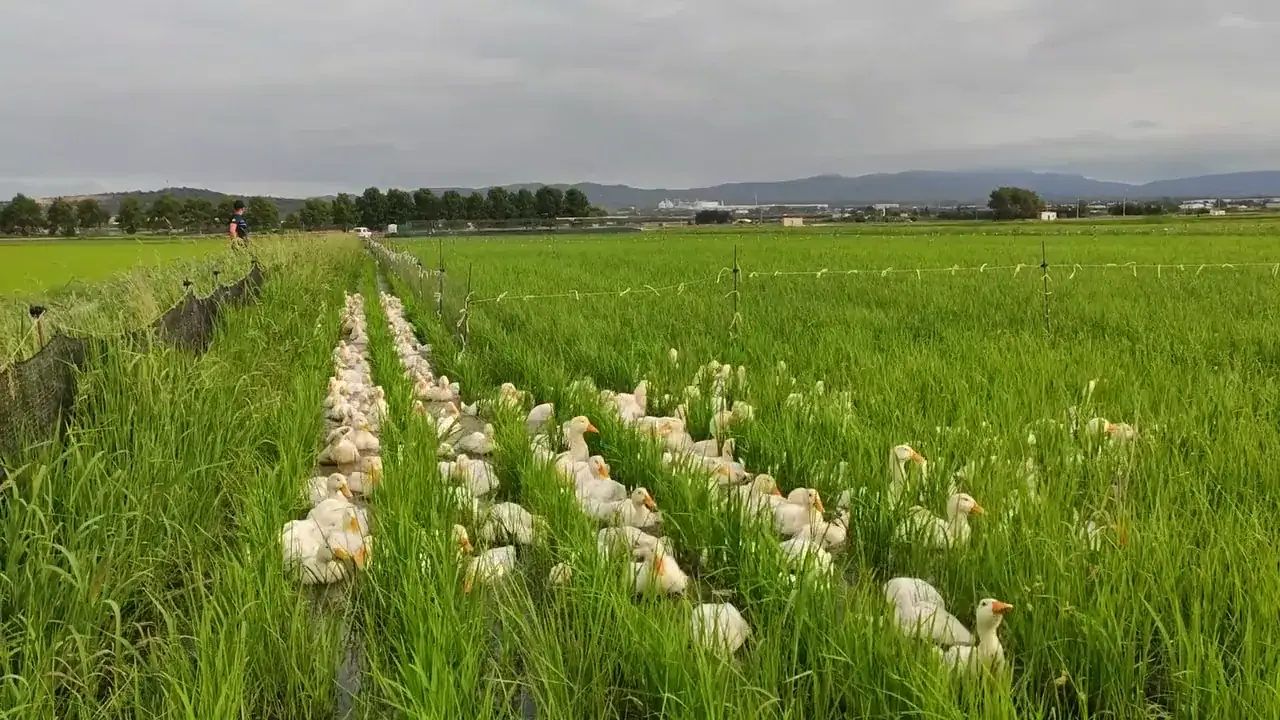
- Integrating planned grazing, with livestock moved daily.
- Managing the farm agroecologically, reducing water use and minimising waste.
- A social pillar: knowledge exchange, short supply chains and connection with consumers.
The criteria have been developed for six types of production: olives, citrus and fruit trees, viticulture, market gardening, arable crops and cattle.
What has been measured in Catalonia
CREAF's RegeneraCat project, funded by AGAUR, compared regenerative and conventional plots for two years on four Catalan farms covering market gardening, vineyards, fruit trees and grass-fed cattle. Some results presented by CREAF:
- On some farms, at least 35% more soil carbon and at least 9% more water-holding capacity in the regenerative plots.
- Up to 3.6 °C lower maximum soil temperatures in summer.
- Greater biodiversity of bacteria, fungi and micro-arthropods in the soil.
- After a few years of transition and once the soil has recovered, the same yield as the conventional system at a similar or even lower cost.
The researchers themselves warn that larger-scale data are still lacking. But it is a reference produced here, with our climate and our crops. You'll find more context on our page about regenerative agriculture in Catalonia.
Where to start: five steps in order
1. Know your starting point
Before changing anything, take a snapshot of your farm:
- A laboratory soil test at fixed points. If you don't know how to interpret it, start with our guide to reading a soil test.
- An inventory of bioindicator plants by zone.
- Dated photos from reference points.
- A review of your input costs.
2. Sort out the water
According to P. A. Yeomans' scale of permanence, as presented by Cornell University's Small Farms Program, water is planned before roads, trees or soil. Walk the farm after rain and see where water runs and where it carries soil away. Keyline design gives you a method for doing this.
3. Cover the soil
On many farms it is the change with the best ratio of effort to result. In dryland perennial crops, a temporary autumn–winter cover is a good starting point.
4. Make part of your own fertility
A small biofactory with compost or bokashi lets you recycle farm residues. FAO explains that recycling nutrients, biomass and water within the farm reduces dependence on external resources and increases producers' autonomy. We develop this in the article on autonomy from inputs.
5. Measure and document
Repeat the test and observations with the same method after a few seasons. If one day you want to prove your management to buyers or funders, that record will be the basis of your regenerative passport.
Don't go it alone
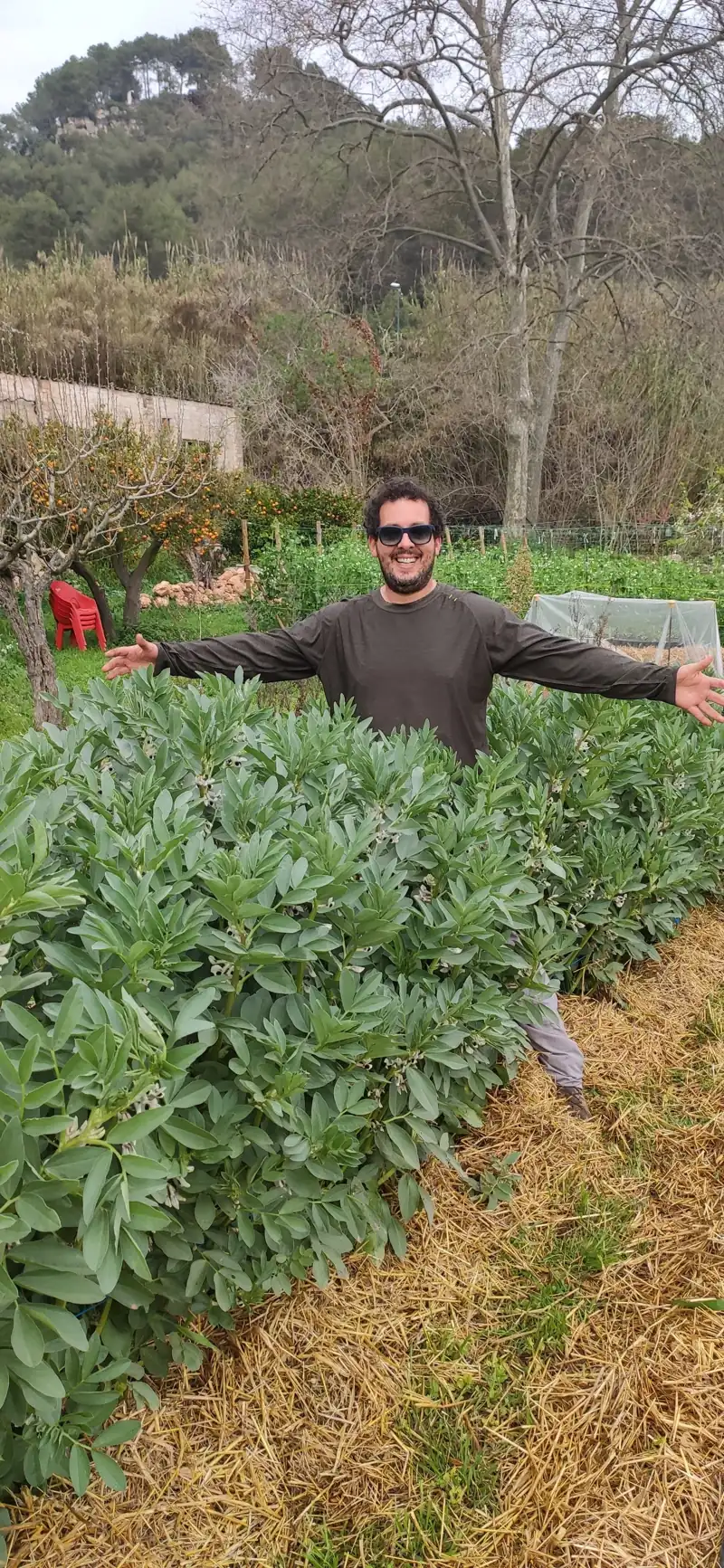
One of the pillars of the CREAF and Association criteria is knowledge exchange. Find other producers already on the path, visit farms and share what you learn. Making mistakes together is cheaper.
Common mistakes
- Changing everything in the first year. Start with one plot.
- Not establishing a baseline. Without it, you won't know whether you are improving.
- Copying recipes from other climates. Adapt each practice to your farm.
- Forgetting water. In the Mediterranean, it is almost always the limiting factor.
- Using the word "regenerative" without backing. Document what you do.
The first step is to look
Regenerative agriculture is not a closed package but a way of managing the farm that is built over time. In Catalonia there is already local science supporting the path.
If you want to start with a diagnosis of your farm and a phased plan, discover our method or write to us.
Be the one who does it.
Sources
- CREAF. Ciencia y campesinado definen los diez criterios básicos de la agricultura regenerativa (12/02/2026). https://www.creaf.cat/es/articulos/diez-criterios-agricultura-regenerativa-ciencia-campesinado
- CREAF – Regenera. 10 criteris bàsics per definir l'agricultura regenerativa. https://regenera.creaf.cat/criteris/
- Cornell Small Farms Program. Using the Scale of Permanence as a Tool for Land Evaluation (2016). https://smallfarms.cornell.edu/2016/04/scale-of-permanence/
- FAO. The 10 elements of agroecology: Recycling. https://www.fao.org/agroecology/overview/the-10-elements-of-agroecology/recycling/en