The farm's regenerative passport: traceable practices and measurement without greenwashing
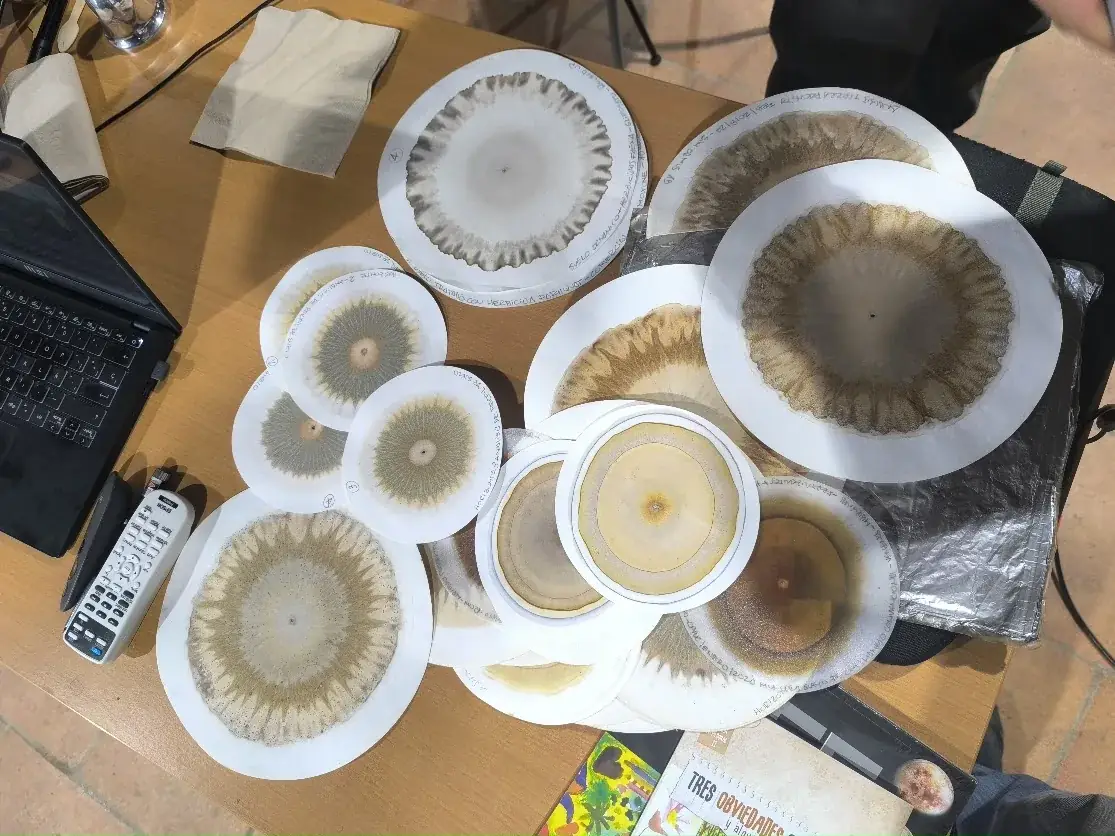
"Regenerative agriculture" has become a very attractive label. So attractive that today anyone can put it on a package. CREAF and the Iberian Regenerative Agriculture Association pointed out the problem in February 2026: the rise of regenerative agriculture has not been accompanied by official certification, and that has allowed some players to use the term as a greenwashing tool.
If you do things right on your farm, or buy from farms that do, you need to be able to prove it. That is what we call the farm's regenerative passport: a living document that records what is done, where, when and with what results.
What the regenerative passport is
It is a record per farm, and if necessary per plot or batch, with the history of practices and the evidence behind it. Its purpose is to back up a product's origin story with facts, not adjectives.
A well-made passport includes, at a minimum:
- Farm profile: location, area, crops or livestock, soil type and climate.
- Sketch and design: plots, water management (for example, keyline design) and homogeneous management zones.
- History of practices: cover crops, tillage, grazing, applications of compost or other bio-inputs, with dates and doses.
- Evidence: dated, geotagged photos, technical visits, checklists.
- Measurements: lab analyses with date, method and sampling point.
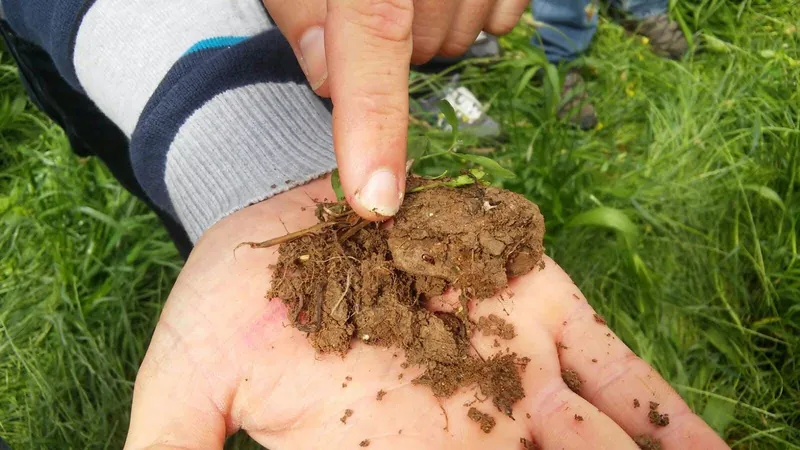
Two kinds of information: practices and results
It is worth separating two things that often get mixed up.
Traceability of practices
This is what you do. It is relatively easy to record and check: if you say you keep a cover crop, a series of dated photos across the year proves it. If you say you don't use inversion tillage, the field-operations log and the technical visit confirm it.
The 10 criteria of CREAF and the Iberian Regenerative Agriculture Association are a good reference for deciding which practices to document. Among others: avoiding tillage, keeping the soil covered as long as possible, integrating planned grazing, managing the farm agroecologically, reducing water use and minimising waste. They were agreed with almost 200 producers, organisations and scientists.
Measuring results
This is what changes on the farm: soil carbon, water-holding capacity, soil life… Here you have to be very rigorous. Numbers only count if they come from a real measurement, with a method and a date. A passport should never show an estimated figure as if it had been measured.
How to measure rigorously: what FAO proposes
In 2020 FAO published a voluntary protocol for the measurement, monitoring, reporting and verification (MRV) of soil organic carbon in agricultural landscapes, the GSOC-MRV protocol. It is designed for farm-scale projects, and among its possible users it lists farmers, agricultural companies, investors, consultants and the supply chain.
The protocol is organised in stages. In simplified form:
- Applicability: check that the project and practices fit.
- Boundaries: define which area and which period are measured.
- Baseline and intervention scenarios: describe what would happen under usual management and what changes with the new practices.
- Prior assessment and monitoring: soil sampling, modelling and emissions estimation.
- Reporting and verification: periodic reports and verification.
Not every farm needs the full protocol. But its logic is the right one: first a baseline, then monitoring with the same method, and finally someone who can verify it.
Why the baseline is everything
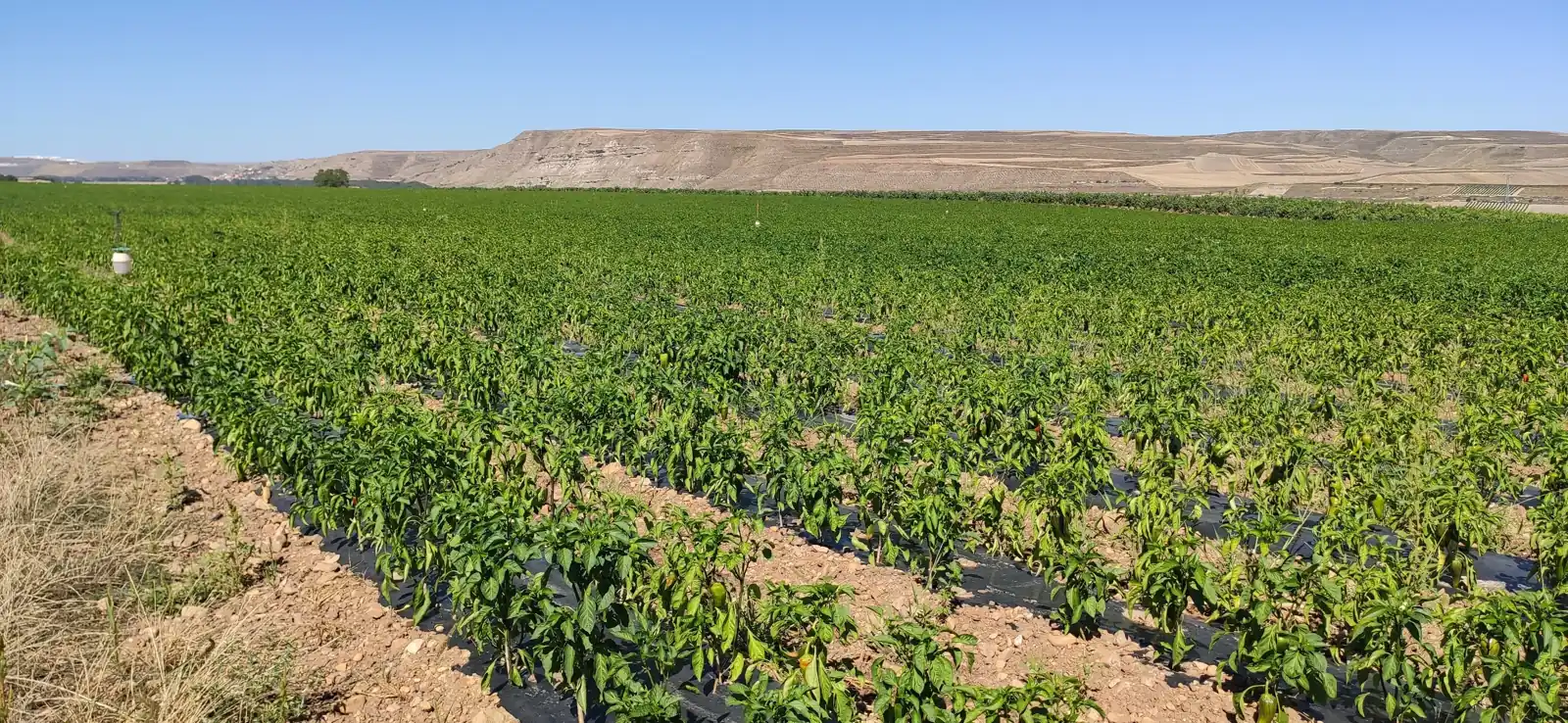
Without a starting picture, there is no way to prove improvement. The NRCS of the US Department of Agriculture puts it like this: soil health tests help track changes over time and assess the effectiveness of conservation practices.
A useful baseline combines:
- Lab analyses at fixed, georeferenced sampling points.
- Reference photos from the same points and at the same time of year.
- Field observations: structure, infiltration, spontaneous flora, presence of earthworms.
And then, repeat under the same conditions. That is how serious studies work. In the RegeneraCat project, CREAF compared regenerative and conventional plots on Catalan farms over two years, and in some it found soil carbon concentrations at least 35% higher and water retention at least 9% higher in the regenerative ones.
Who the passport is useful for
- For the farmer: it organises their information, helps them decide and gives them arguments to negotiate with buyers.
- For the brand or retailer: it backs up their sourcing commitments with evidence, not slogans.
- For whoever funds the transition: it shows progress practice by practice and season by season.
Common mistakes
- Publishing figures without measurement. No analysis, no number.
- Changing method or sampling point between seasons.
- Documenting only the good bits. A credible passport also records what didn't work.
- Doing it after the fact. Evidence is collected while the work is done, not at the end.
- Confusing practices with results. Growing a cover crop is a practice; more soil carbon is a result that has to be measured.
Regenerate, and prove it
Regenerating a farm is a long process. The passport doesn't speed it up, but it makes every step count and makes it possible to show.
If you want to set up the regenerative passport for your farm, or for the farms that supply you, with a solid baseline and a practical recording system, write to us.
Be the one who does it.
Sources
- CREAF. Science and farmers define the ten basic criteria of regenerative agriculture (in Spanish, 12/02/2026). https://www.creaf.cat/es/articulos/diez-criterios-agricultura-regenerativa-ciencia-campesinado
- CREAF – Regenera. 10 basic criteria to define regenerative agriculture (in Catalan). https://regenera.creaf.cat/criteris/
- FAO (2020). A protocol for measurement, monitoring, reporting and verification of soil organic carbon in agricultural landscapes – GSOC-MRV Protocol. https://openknowledge.fao.org/server/api/core/bitstreams/e8781eb7-83c2-4ade-980b-f5872603bcb1/content
- USDA NRCS. Soil Health. https://www.nrcs.usda.gov/conservation-basics/natural-resource-concerns/soil/soil-health