
Keyline design: how to plan your farm's water from the landform
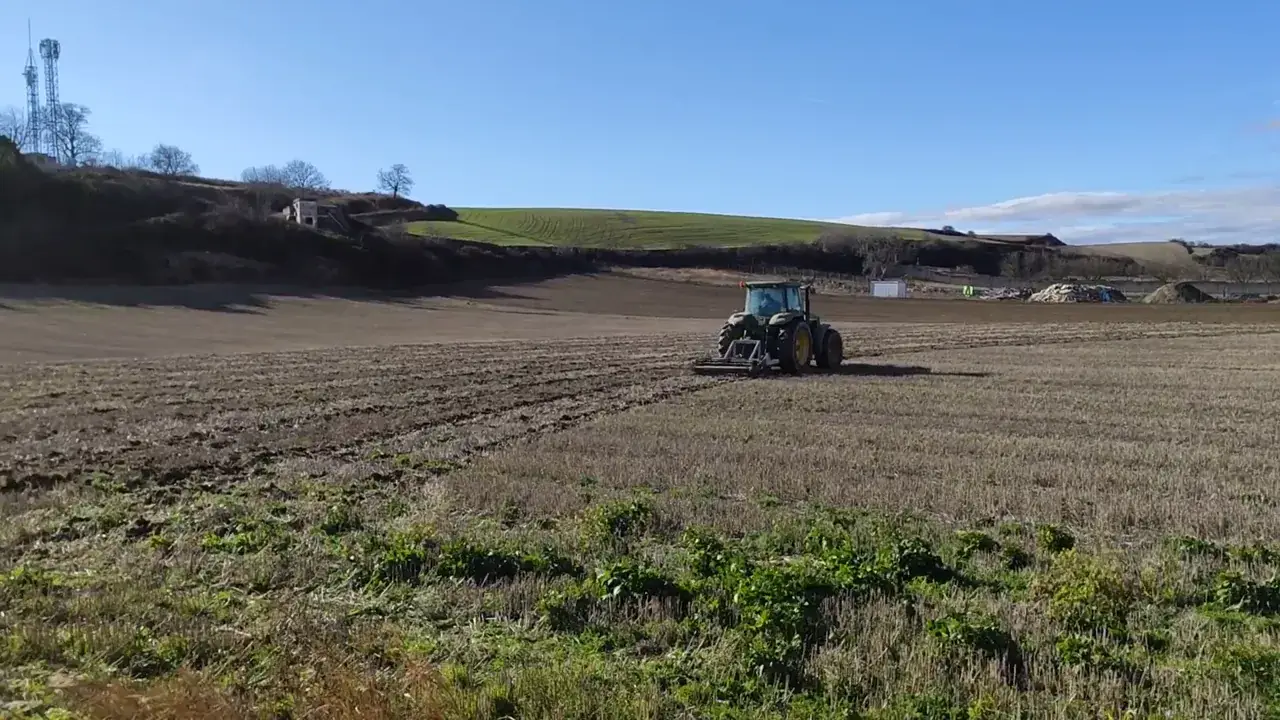
In the Mediterranean, water is rarely missing altogether: what is missing is water that stays. It rains little, often all at once, and much of it runs downhill taking soil with it. Keyline design was born precisely for this: so that the rain that falls on your farm stays on your farm, starting with the soil.
In this article we explain where it comes from, what the keypoint and keyline are, why water comes before almost everything else, and how to take the first steps.
Where keyline comes from
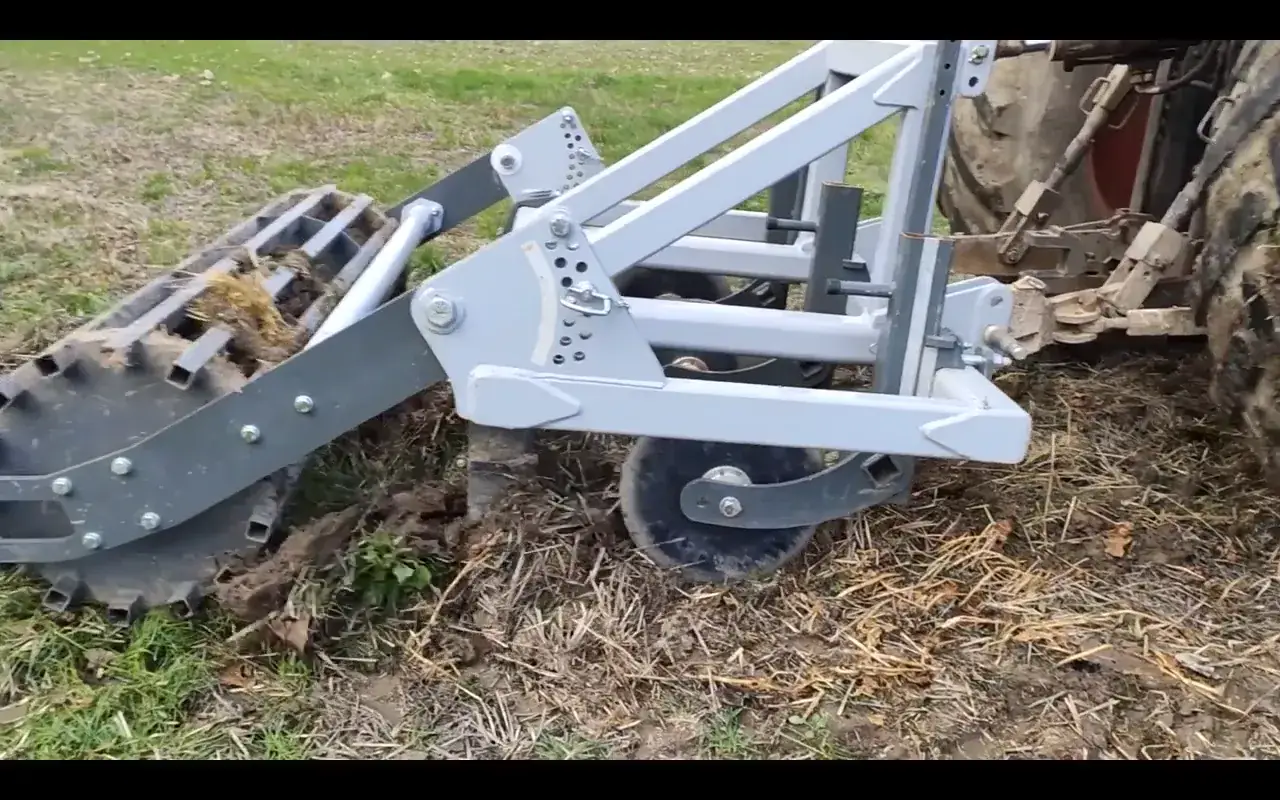
Keyline was developed by the Australian farmer and engineer P. A. Yeomans. His first book on the system was published in 1954, according to Keyline Designs, the company that continues his work. Among other things, Yeomans pioneered on-farm irrigation dams and chisel ploughs and subsoilers that aerate the subsoil.
In The Keyline Plan, Yeomans defines it as a system for the progressive development of fertile soil. Its main aim is to improve soil structure, increase fertility and the real depth of fertile soil. And its first purpose, in Yeomans' own words, is to provide simple means of conserving in the soil all the rain that falls, delaying its evaporation and using that moisture to produce fertility.
Keypoint and keyline: the two key ideas
To understand the system, look at a valley on a contour map. Yeomans explains it like this:
- Higher up, the valley floor is narrower and steeper than the ridges around it.
- Further down, the valley floor becomes wider and flatter than the ridges.
- The keypoint is the point on the valley floor where that change of slope happens.
- The keyline is the line running from that point in both directions, either exactly on contour or with a slight fall.
According to Yeomans, every property that includes a watershed has one or more keylines. That line becomes the guide for the rest of the design: where to place dams, tracks and plantings and, above all, in which direction to work the soil.
Why does the direction of work matter?
Naturally, water concentrates in the valleys and leaves the ridges drier. Yeomans refined a subsoiling system following an "exaggerated" contour pattern that controls runoff, as Keyline Designs describes. The idea is for water to spread more evenly across the slope and soak in, instead of running to the valley floor.
The scale of permanence: planning in order
One of Yeomans' most useful contributions is the scale of permanence. According to Cornell University's Small Farms Program, Yeomans developed it in the 1950s as the backbone of keyline design. It ranks a farm's elements from most to least permanent:
- Climate
- Landform
- Water
- Roads and access
- Trees
- Buildings
- Fencing and subdivision
- Soil
The logic is clear: the higher up the list, the harder it is to change. That is why water is planned before tracks, and tracks before trees. Soil comes last not because it matters less, but because, as Cornell explains, the health and vitality of the topsoil is something the farmer can change relatively quickly through management, cover, aeration and amendments.
First steps to apply keyline on your farm
1. Get a good map
Keyline Designs recommends working with contour maps overlaid on aerial photos, and considers a digital terrain model of the farm a good investment.
2. Walk the farm after rain
Cornell suggests mapping water by walking the property: look for micro-catchments, flow directions, waterlogged areas and eroded areas. Take the map and note what you see.
3. Find the keypoints
With the map and your observations, identify where the slope changes on each valley floor. You don't need millimetre precision to start, but you do need to check it on the ground.
4. Order decisions by the scale of permanence
Before planting trees or opening a new track, ask yourself how it affects water. A badly laid track can become an erosion channel for decades.
5. Start with a pilot plot
Apply the soil-working pattern on one plot, watch how it responds to rain and document the changes with dated photos.
Keyline within a regenerative system
Keyline does not work alone. If you work the soil along the contours but leave it bare, water will keep carrying soil away. That is why we combine it with the practices that CREAF and the Iberian Regenerative Agriculture Association include in their regenerative agriculture criteria, such as keeping the soil covered as long as possible to reduce erosion and conserve moisture, and reducing water use.
FAO gives an example that illustrates this combination: after Hurricane Mitch in 1998, farms in Central America with agroforestry, contour farming and cover crops retained between 20% and 40% more topsoil than neighbouring farms with conventional monoculture.
Common mistakes
- Copying designs from elsewhere without reading your own landform.
- Starting with soil or trees and leaving water until last.
- Relying only on the map without walking the farm in the rain.
- Leaving the soil bare after working it.
- Not documenting: without photos and notes, you won't know what has changed.
Design with water, not against it
Keyline is, above all, a way of looking at the farm. Once you understand where water comes in, moves and leaves, many decisions fall into place.
If you want a keyline design for your farm, with a reading of the landform, a water plan and priorities for action, write to us.
Be the one who does it.
Sources
- Keyline Designs. Water for Every Farm – Yeomans Keyline Plan. https://www.keyline.com.au/
- P. A. Yeomans. The Keyline Plan, chapter 1, "Keyline – A New Principle" (Soil and Health Library). https://soilandhealth.org/wp-content/uploads/01aglibrary/010125yeomans/010125ch1.html
- Cornell Small Farms Program. Using the Scale of Permanence as a Tool for Land Evaluation (2016). https://smallfarms.cornell.edu/2016/04/scale-of-permanence/
- CREAF. Science and farmers define the ten basic criteria of regenerative agriculture (in Spanish, 12/02/2026). https://www.creaf.cat/es/articulos/diez-criterios-agricultura-regenerativa-ciencia-campesinado
- FAO. The 10 elements of agroecology: Resilience. https://www.fao.org/agroecology/overview/the-10-elements-of-agroecology/resilience/en