Traceability and measurement on a regenerative farm: what to measure, how and why

Saying a farm is regenerative is easy. Proving it is harder. When a brand or retailer funds the transition of its supplier farms, it needs to know what is happening in the soil, the water and the biodiversity. And the farmer needs that measurement to help them make decisions, not just to fill in paperwork.
In this guide we explain how we at True Regenerative approach traceability and measurement on a regenerative farm: what MRV is, which indicators make sense and how to organise it so it is useful and credible.
What MRV is and why it matters
Measure, report and verify
MRV stands for measurement, reporting and verification. It is the system that takes you from "we think the soil has improved" to "this is what we measured, when, how and who can check it".
- Measurement: collecting field data with a defined protocol.
- Reporting: organising that data so it can be understood and compared.
- Verification: making sure the data has a date, an origin and evidence, so a third party can review it.
Traceability: from batch to farm
Traceability links the product to the farm and to the practices applied. Knowing what was done, where and when allows a company to explain the origin of what it sells with evidence, not just with a label or a slogan.
Start with the baseline
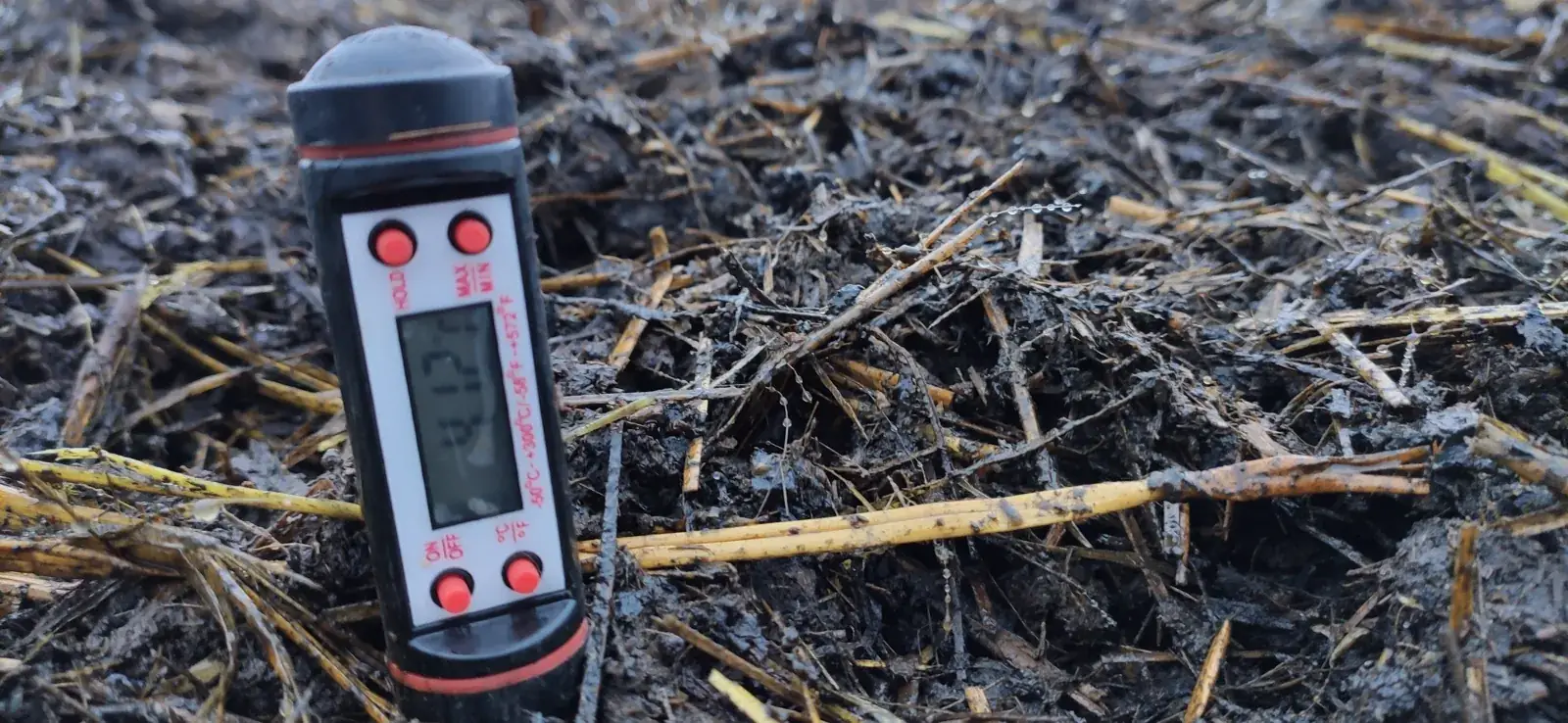
Every measurement needs a starting point. The baseline is taken during the diagnosis, before management changes, and it is the snapshot against which the following years will be compared. If it isn't taken properly at the start, there is no honest way to talk about improvement later.
When setting it, it helps to:
- Mark the sampling points so you always return to the same ones.
- Note the date, the time of year and the state of the crop.
- Take dated photos from the same spots.
- Record previous management: what was used to fertilise, how the soil was worked, how it was irrigated.
Soil indicators
Soil is at the centre of regenerative agriculture, so that is where to look most closely.
Lab indicators
- Soil organic matter and organic carbon.
- Basic chemical analysis: pH, main nutrients and exchange capacity.
- Biological analysis, where the programme allows, to understand soil life.
Field indicators
Many indicators can be observed on the farm without a lab, and the farmer can learn to track them:
- Structure and aggregates: how a clod crumbles.
- Infiltration: how long water takes to enter the soil.
- Cover: how much soil is left bare through the year.
- Visible life: earthworms, roots, the smell of the soil.
- Compaction at different depths.
The important thing is to always measure them the same way, at the same points and at the same time of year.
Water indicators
Water management is decisive, especially in a Mediterranean climate.
What to observe
- Infiltration and retention: whether rainwater stays on the farm or runs off.
- Runoff and erosion: rills, gullies, soil washed away after storms.
- Irrigation use: how much water is applied and when, with simple records.
- Water quality, where there are ponds, irrigation channels or integrated aquaculture.
Practices such as keyline design aim precisely to spread water and help it infiltrate better. That is why it is key to measure before and after intervening.
Biodiversity indicators
Biodiversity is harder to measure, but there are practical ways to track it:
- Species diversity in cover crops and margins: simple lists per plot.
- Presence of pollinators and beneficial fauna in flower strips and hedges.
- Birds and other animals observed on fixed routes.
- Landscape structure: hedges, trees, ponds, uncultivated areas.
You don't need to measure everything. It is better to choose a few indicators and track them consistently.
Management and autonomy indicators
Besides the ecosystem, it is worth recording what the farm does:
- Practices applied: which bio-inputs, at what doses and on what dates.
- Use of external inputs: what is bought and what is produced in the farm's own biofactory.
- Training received and decisions the farm team already makes on its own.
These indicators show something the company cares about a lot: whether the farm is on its way to becoming autonomous, not dependent.
How to organise measurement so it works
A common protocol for all farms
If a company funds several farms, they must all measure the same things in the same way. Otherwise the data can't be compared or added up. This protocol should be set in the first pilot.
Digital records with evidence
A farm logbook where each practice is noted with date, photo and location makes the information easy to review. At True Regenerative we are developing our own logbook and visit checklist tools designed for this.
The farmer owns their data
The farm must control its data and give permission to share it with the company. Without that trust, measurement becomes surveillance and the programme loses its meaning.
Caution with carbon and regulatory reporting
Measuring soil carbon is useful to understand the farm, but selling credits or using the data in regulatory reports requires verified methodologies. Better not to promise anything that hasn't been validated.
Measurement on real farms
On the farms we have supported, from market gardens in the Baix Llobregat to a rice farm in the Ebro Delta or a dryland farm in the Terra Alta, we have seen that systematic monitoring helps make better decisions and explain the work done. You can get to know them on our cases page. The next step is to apply the same measurement protocol on all the farms in a programme, so the data can be compared.
What other companies and research centres are doing
Measurement is already the norm in large programmes. These figures come from the sources themselves:
- Navarra 360º (EIT Food, with Danone, Intermalta, Cargill and Alpro): in 2025 there were more than 200 sampling points and more than 700 full analyses (fertility, carbon stock and soil microbiology). Its MRV system combines digital tools, models such as Cool Farm Tool and DNDC, and real soil carbon measurements (EIT Food, 17/02/2026).
- Heineken Spain with InterMalta: on 40 measured farms, the company reports 42% lower GHG emissions per tonne of barley compared with the baseline at the start of the programme. Soil carbon capture is monitored with data independently verified by AENOR (Corresponsables, in Spanish, 22/09/2026).
- Nestlé: classifies farms into three maturity levels with its Farm Assessment Tool. It reports 20.7% of key ingredients sourced from farmers adopting regenerative practices in 2025, after a change in methodology, and has set a target of 50% by 2030 (Nestlé, accessed 15/10/2026).
- PepsiCo: reports 4.7 million acres with regenerative, restorative or protective practices, against a target of 10 million by 2030. Validation is annual, with approved reporting tools and farm data (PepsiCo, 01/07/2026).
- CREAF (RegeneraCat project, Catalonia): after two years of sampling on four Catalan farms, CREAF reports that soil carbon concentration is at least 35% higher in the regenerative plots of Verdcamp Fruits and Pomona Fruits than in conventional ones, that water retention is at least 9% higher and that in summer maximum soil temperatures can drop by up to 3.6 degrees (CREAF, in Spanish, 13/02/2026).
These are figures from those organisations, not from True Regenerative. They show which indicators are really being used: carbon, water, soil biodiversity and emissions.
Frequently asked questions
How often should you measure?
It depends on the indicator. Some field observations can be done at every visit; lab analyses less often and always at the same time of year.
Who does the measuring, the technician or the farmer?
Both. The technician defines the protocol and does the more specialised measurements; the farmer learns to record their practices and observe their soil.
Measure what matters on your supplier farms
If your company wants to fund the regenerative transition of its farms and needs clear data on soil, water and biodiversity, we help you design the measurement protocol from the first pilot.
👉 Write to us from the contact page and we'll tell you how we approach it. You can also see the For companies page.
Be the one who does it.